Blog
Practical guidance on validation, regulatory compliance, and documentation for regulated manufacturing.
Do AI-Generated Protocols Need an Enterprise Platform?
What executing a protocol really requires under Part 11 and Annex 15, why AI assistants push a hybrid stack, and when an enterprise platform wins.
UPS Firmware Update Revalidation: What Needs Re-Testing
What a firmware update on a qualified UPS can actually change, when the answer is an impact assessment versus targeted re-testing, and a worked re-test list.
How to Write Expected vs Actual Results in an OQ Protocol
How to phrase the expected result column before approval, how to record actual results at the time of performance, and what to do when the two disagree.
Can You Use AI to Write GMP Documents? FDA Just Answered
FDA's April 2026 warning letter appears to be its first with a dedicated AI section. What 21 CFR 211.22(c) requires when AI drafts your GMP documents.
How to Set OQ Machine Parameters: Low, Nominal, High
Where the low, nominal, and high challenge points in an OQ protocol should come from, how they bracket the operating range, and the mistakes to avoid.
Does a -80C Freezer Need a PQ?
Whether an ultra-low temperature freezer needs performance qualification, what a storage-equipment PQ actually contains, and when the scope can shrink.
Does Temporary Equipment Need an IQ?
When rental, loaner, and short-term equipment needs installation qualification, what a right-sized IQ looks like, and how to document the decision.
Combined vs Separate OQ/PQ Protocols: How to Decide
The decision factors for combining OQ and PQ into one protocol or keeping them separate, what regulators actually allow, and how to document the choice.
When Is a PQ Not Required?
The three cases where a PQ is genuinely not required, the regulatory test behind the decision, and how to document skipping it so it survives an audit.
Temperature Mapping and Thermal Validation That Holds Up
How to run temperature mapping that survives audits: worst-case sensor placement, empty vs loaded studies, open-door and power-loss recovery, and seasonal maps.
Cleaning Validation: Worst Case and Carryover Limits
How to pick the worst case, set health-based carryover limits, choose swab versus rinse sampling, and defend it all in an audit.
How to Automate Validation Documentation
What can be automated safely in validation documentation, what must stay with a qualified engineer, and how to save time without data integrity risk.
Regulatory Traceability in IQ OQ PQ Protocols
How to trace from user requirements through risk to test steps, so your IQ, OQ, and PQ package answers an auditor in one line.
How to Create Audit-Ready Validation Protocols Quickly
Fast and audit-ready are not opposites. A workflow that produces defensible IQ, OQ, and PQ protocols without weeks of rework.
Best Validation Protocol Software for Pharma
A buyer's guide to validation protocol software for pharmaceutical manufacturing: the four tool categories and the criteria that matter under Part 210/211.
How to Generate ISO 13485 Validation Protocols
What ISO 13485 and the FDA QMSR actually expect from your IQ, OQ, and PQ, and how to ground protocols in the right clauses.
Why Does Our IQ Protocol Keep Failing FDA Audits?
The recurring root causes behind 483 observations on IQ protocols, and the fix for each one. The problem is rarely the equipment.
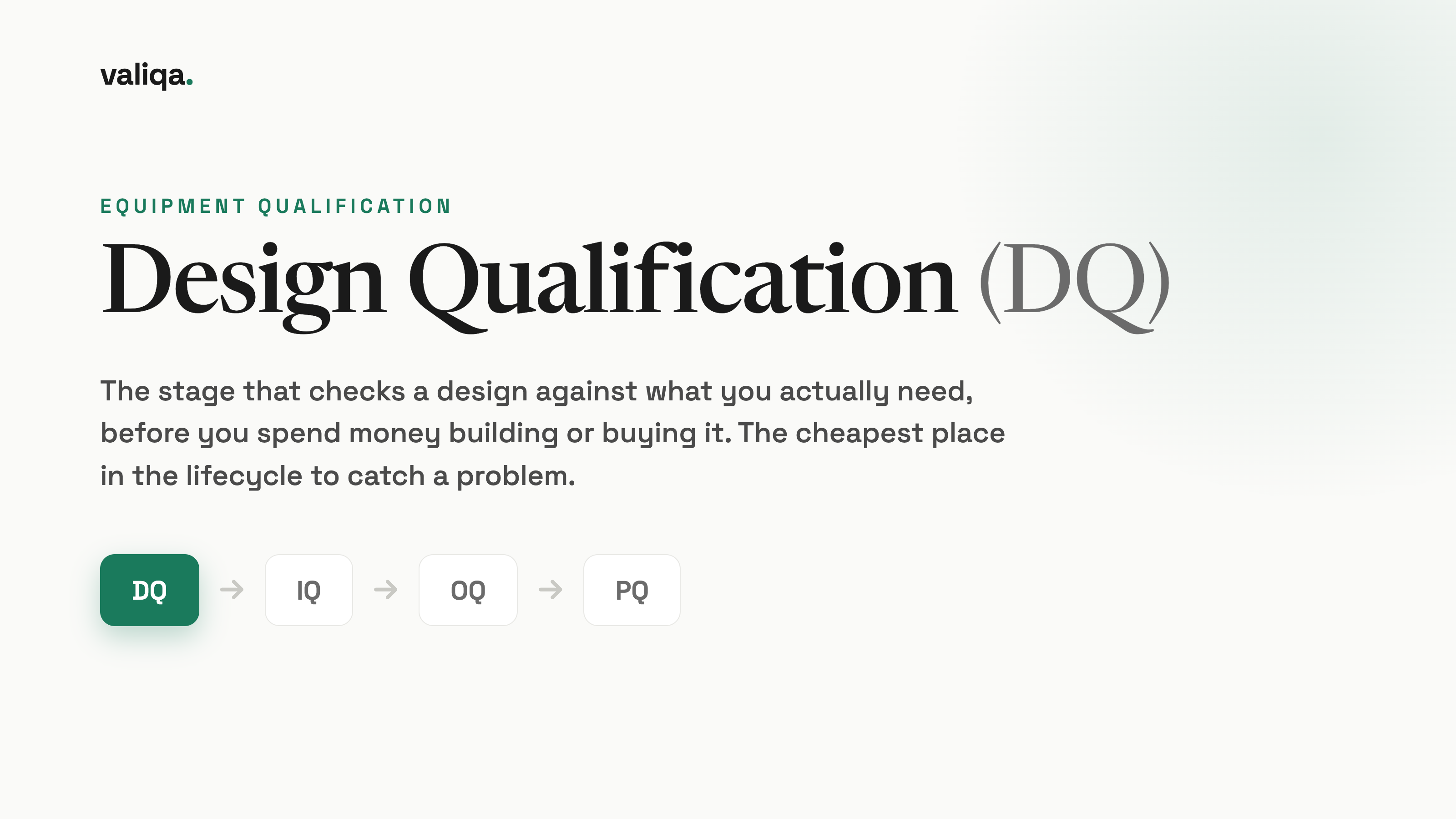
Design Qualification (DQ): When and How to Write One
What a DQ actually verifies, when it is worth doing, and how to write one that stands up in an audit.
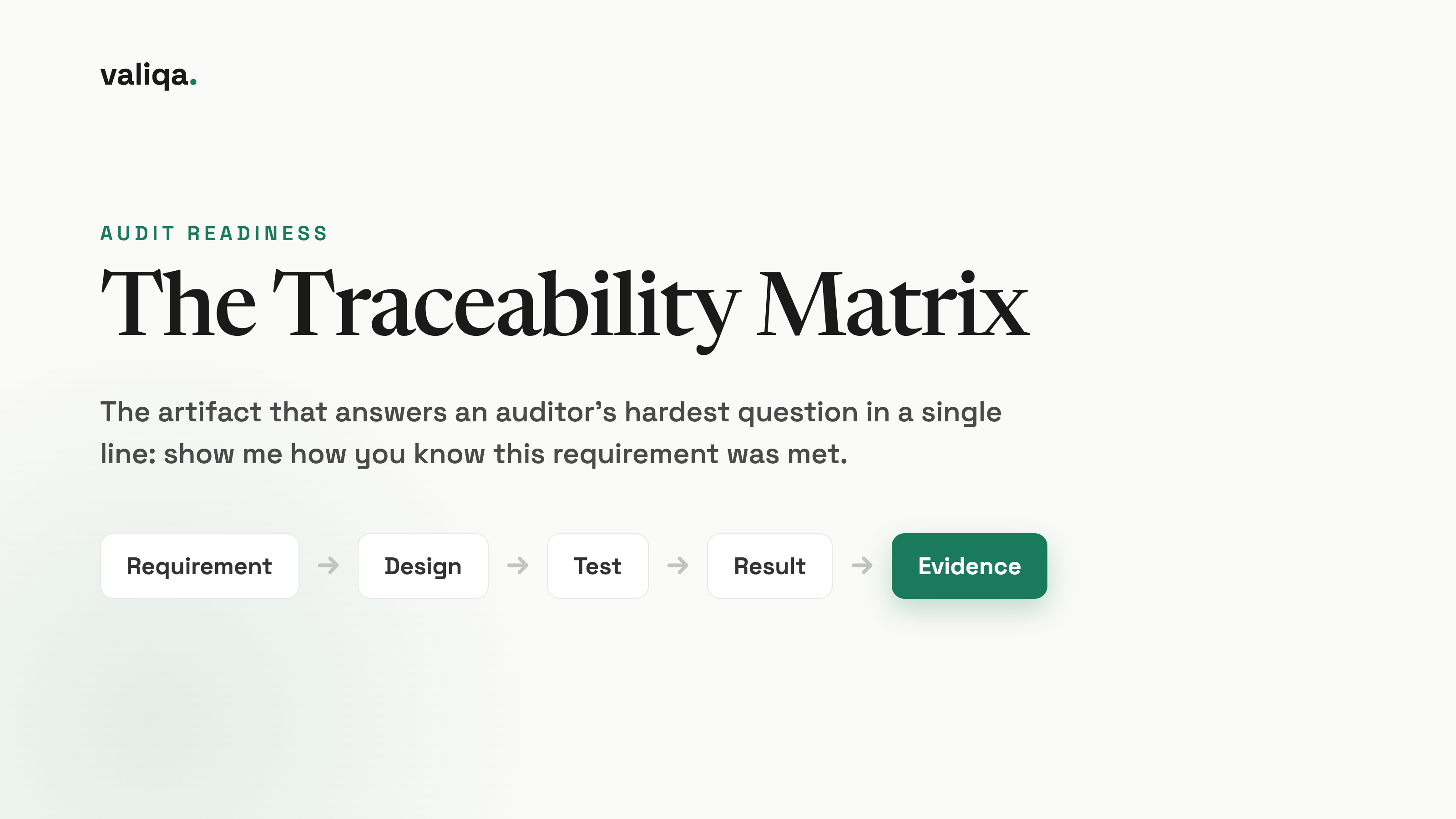
Traceability Matrix in Validation: A Working Guide
What belongs in a traceability matrix, how forward and backward tracing catch gaps, and how it answers an auditor's hardest question.
Manual vs Generated Validation Protocols
Hand-written and generated validation protocols move effort and error risk to different places. A side-by-side look at where each wins.

PPQ: Process Performance Qualification Guide
What a PPQ protocol has to contain, how many runs you actually need, and how to defend your sample sizes when the auditor asks.
How to Write a Part 11 Compliant CSV Protocol
A CSV protocol alone does not make a system Part 11 compliant. The controls that do, and how to verify each one in your protocol.
Validation Master Plan Template (Free Download)
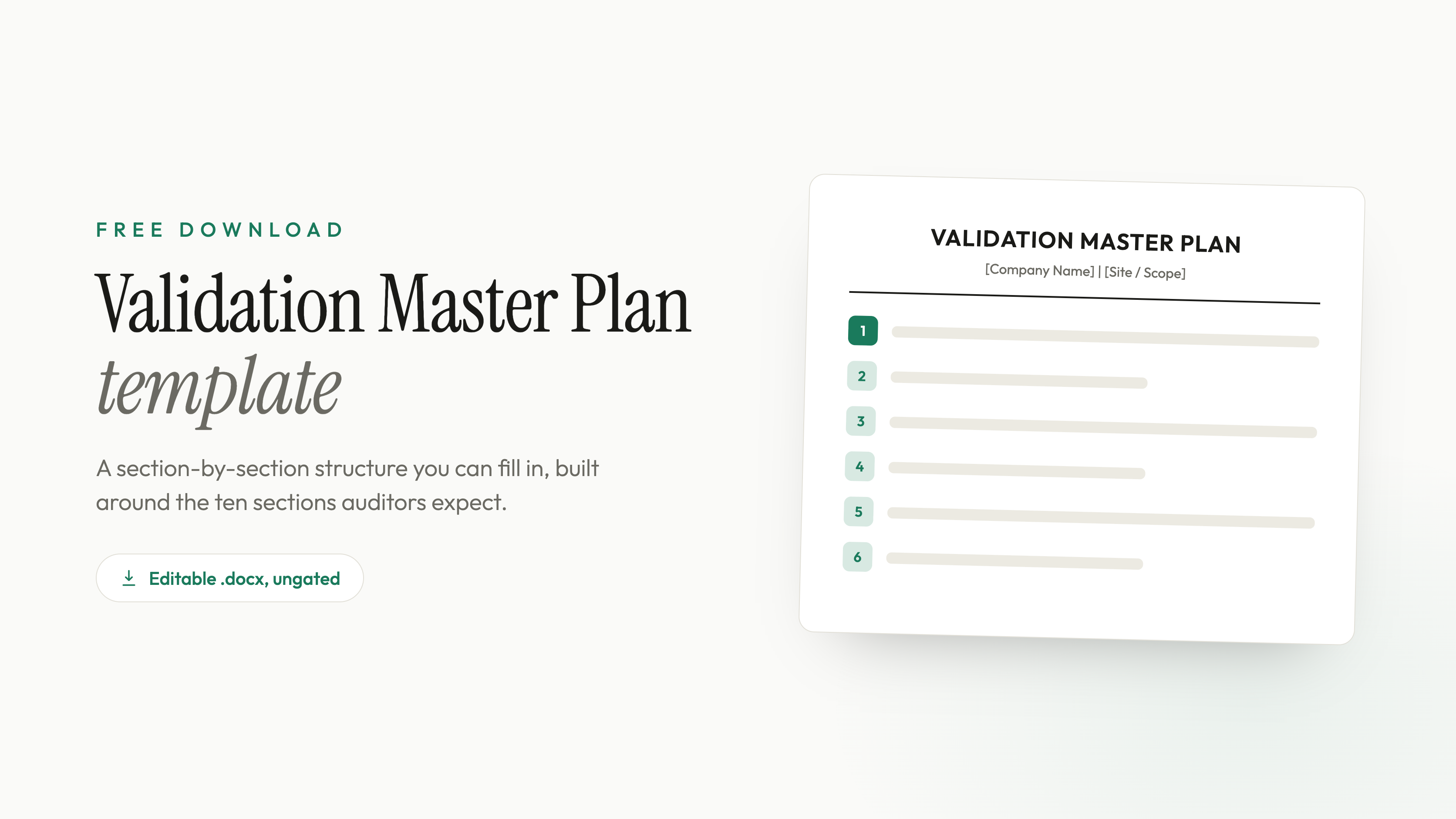
A free, editable Validation Master Plan template with a section-by-section guide to what goes in each of the ten sections.
CSA vs CSV: What FDA's Final Guidance Changed
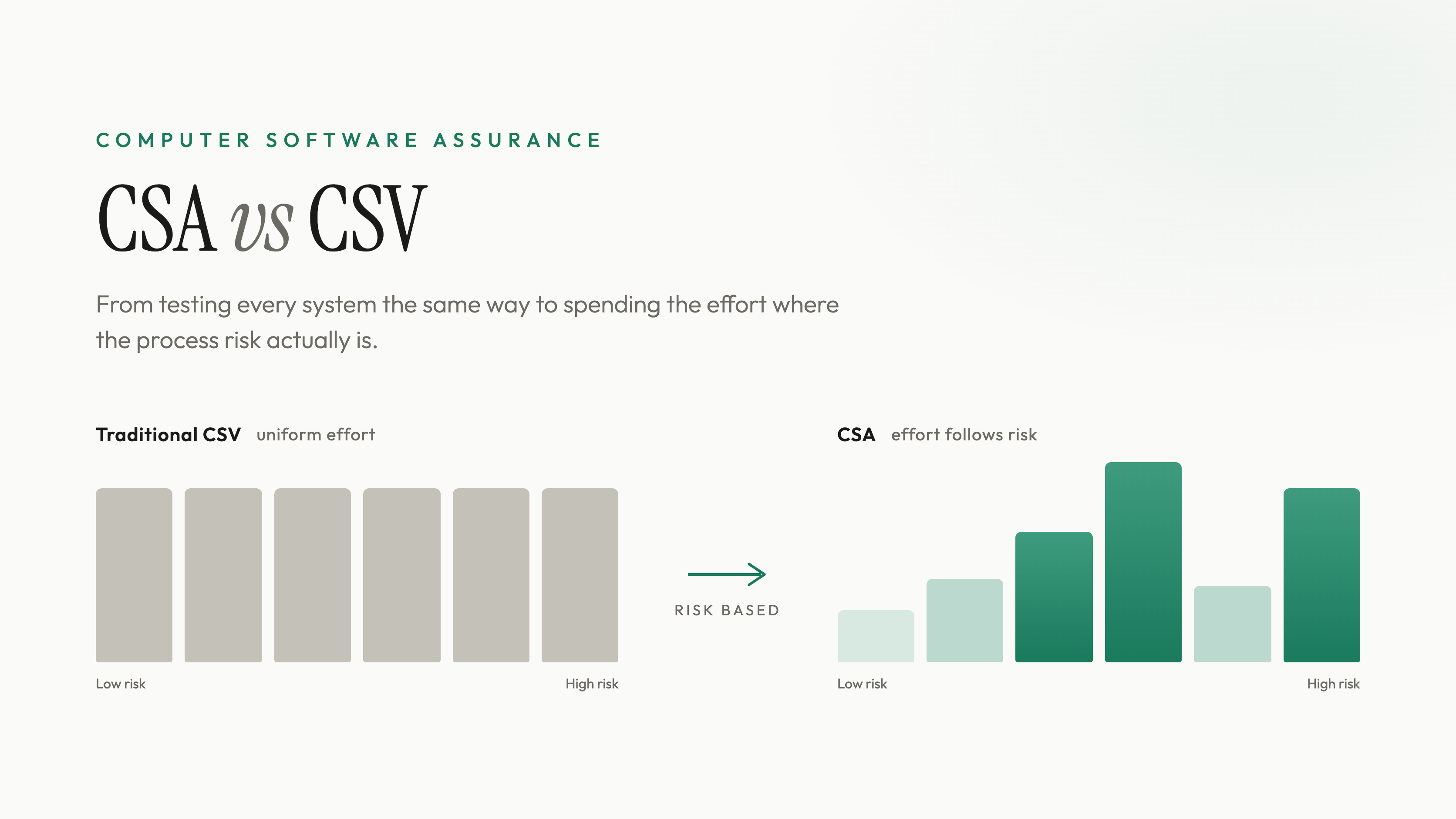
Computer Software Assurance is now final FDA guidance. What actually changed from traditional CSV, and what it means for your validation program.

GAMP 5 Software Categories Explained
What GAMP 5 Categories 1, 3, 4, and 5 actually mean, why your PLC or SCADA is probably Category 4, and how the category drives validation effort.

PFMEA for Manufacturing: When and How to Use It
Process FMEA for regulated manufacturers: when PFMEA is required, how Action Priority replaced RPN under AIAG-VDA, and how it connects to validation.

What Is a Validation Master Plan and Who Owns It?
A practical breakdown of what a Validation Master Plan actually contains, who owns it in a healthy organization, and where most teams get it wrong.
Revalidation: When to Redo IQ/OQ/PQ
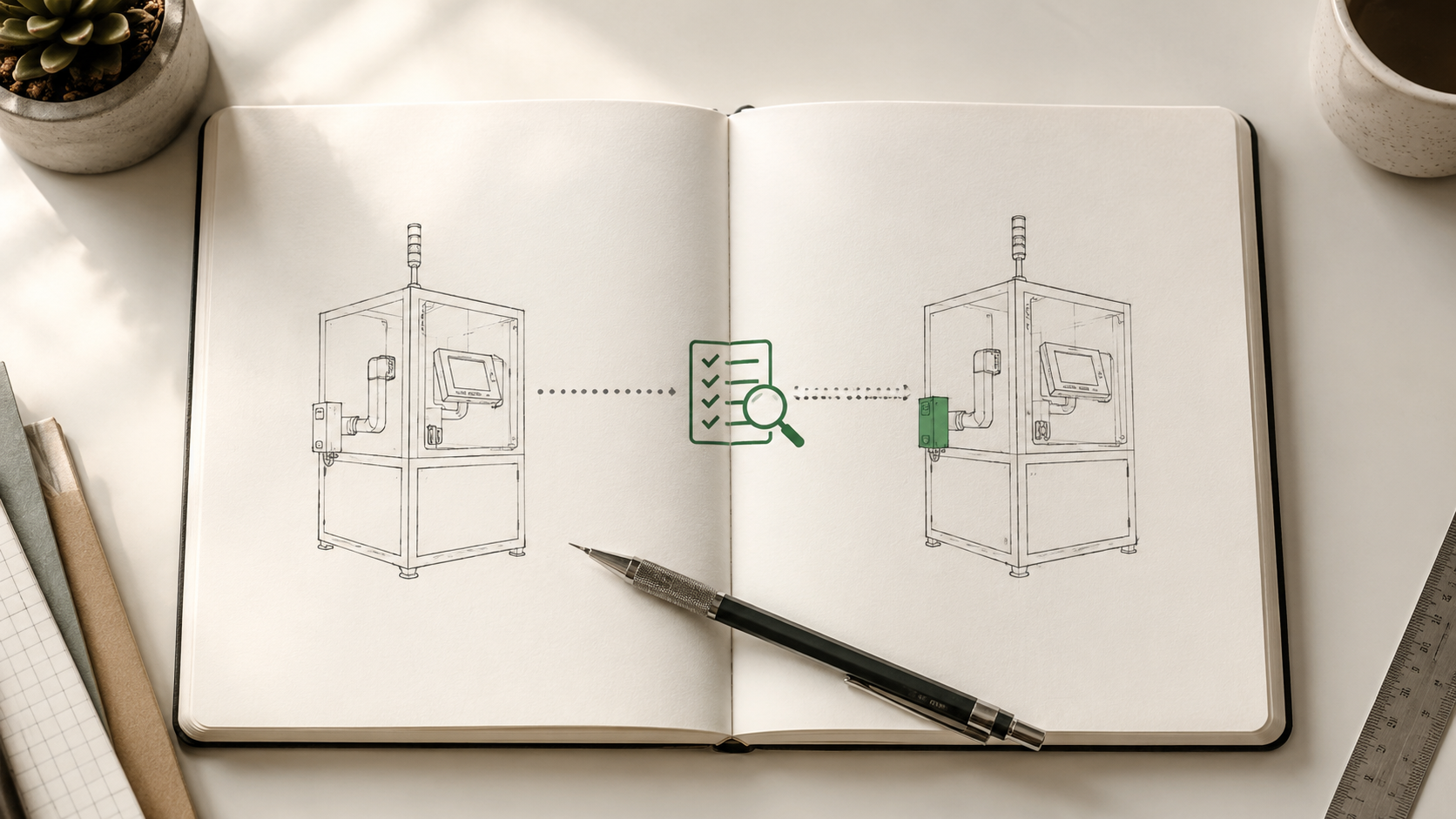
A risk-based framework for when equipment needs revalidation, when partial requalification is enough, and when documented no-action is right.

How Long Does It Take to Write an OQ Protocol?
An honest, phase-by-phase breakdown of where the time goes when you write an OQ protocol, where tools help, and where they do not.

How to Choose Validation Software
A category-level guide to evaluating validation software for IQ, OQ, and PQ. Four categories, seven dimensions, and an honest take on where each fits.
Validation After Equipment Software Updates
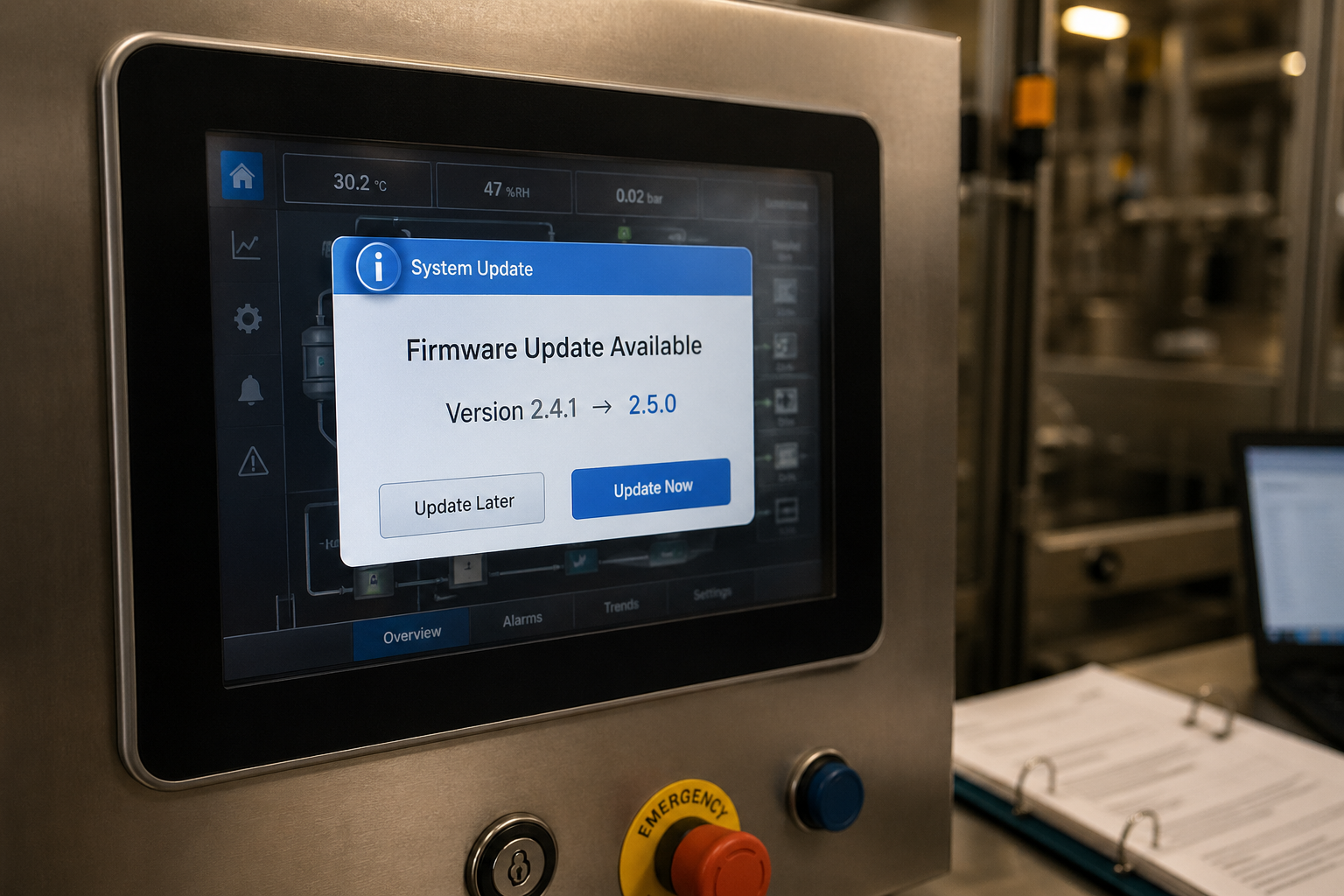
A vendor pushes a firmware update and your equipment is validated. The change-classification framework that decides what needs re-testing.

How to Write Audit-Ready Acceptance Criteria
Vague acceptance criteria are the fastest way to fail an audit. The exact structure validation engineers use to write criteria that hold up.

Does Equipment Need IQ Only or Full IQ/OQ/PQ?
When IQ alone is sufficient and when full IQ/OQ/PQ is required: a practical decision framework for validation engineers.

What Auditors Look for in Validation Documents
Where auditors actually focus: approval chains, acceptance criteria traceability, execution gaps, and deviation handling.

How to Write an OQ Protocol From Scratch
Step-by-step OQ protocol writing: URS review, CPP identification, test steps, and acceptance criteria, written by a validation engineer.

IQ vs OQ vs PQ: What Goes in Each Protocol
Installation, Operational, and Performance Qualification broken down: what goes in each protocol, what auditors look for, and where most fall apart.
We use essential cookies for authentication and security. With your consent, we also use Microsoft Clarity, Google Analytics, and the LinkedIn Insight Tag on our marketing pages to understand how visitors navigate the site and to measure our advertising. Read our privacy policy.